

Basel, Baia Mare and Omiš to carry the European Christmas title in 2027
Basel (Switzerland), winner in the European Capital of Christmas category (more than 150,000 inhabitants). Baia Mare (Romania), winner in the European City of Christmas category (between 10,000 and 150,000 inhabitants). Omiš (Croatia), winner in
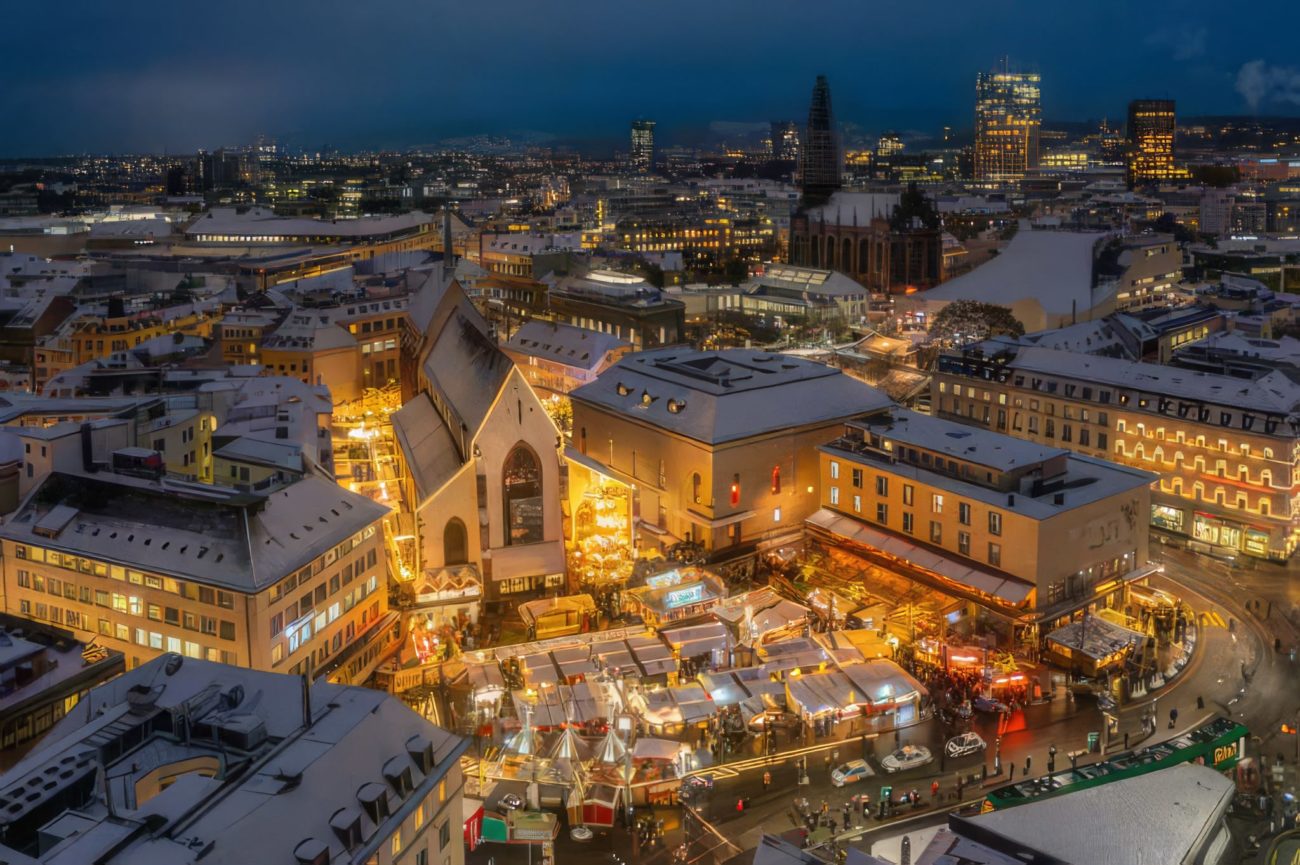
- Basel (Switzerland), winner in the European Capital of Christmas category (more than 150,000 inhabitants).
- Baia Mare (Romania), winner in the European City of Christmas category (between 10,000 and 150,000 inhabitants).
- Omiš (Croatia), winner in the European Village of Christmas category (fewer than 10,000 inhabitants), with a special mention for the Spanish-Portuguese entry from Fuentes de Oñoro and Vilar Formoso.
Basel (Switzerland), Baia Mare (Romania) and Omiš (Croatia) will be the European Capital, City and Village of Christmas in 2027, respectively. The decision was taken by the international jury of the European Capital of Christmas awards, which also gave a special mention to Fuentes de Oñoro (Salamanca, Spain) for the Christmas it shares with the Portuguese town of Vilar Formoso.
The decision was reached by majority vote of an international jury chaired by economist and former European Commissioner Danuta Hübner. The jury congratulated all the entries on their high technical standard and their commitment to the values of Europe and of Christmas.
The awards ceremony will take place on 3 December at the Pedralbes Monastery in Barcelona, this year’s European Capital of Christmas. It will be attended by city authorities, representatives of the international jury, the winners of the previous edition and guests.
Basel, European Capital of Christmas
The Swiss city of Basel will take over from Barcelona. Located where Switzerland, Germany and France meet, Basel builds its Christmas around a market that began in 1978 and now brings together some 150 stalls on Barfüsserplatz and Münsterplatz, at the foot of the cathedral. More than a million people visit it every year. Around it, the city adds decorated «magic courtyards», a Christmas ferry on the Rhine and a reusable-cup system that handles around 80,000 cups each season.
Christmas in Basel is the umbrella name for the whole programme, coordinated by a public-private association that includes the cantonal government, the tourist board, the retailers’ association and the energy company Industrielle Werke Basel. It features a dozen «Zauberhöfe», or magic courtyards, created in 2023, a vintage Christmas tram, an advent calendar of free performances every evening at Theater Basel, and Christmas exhibitions in the city’s museums. Nine large trees light up the squares of the city centre, and the most photographed, the one at the cathedral, is decorated every year by Christmas designer Johann Wanner.
The application also highlights the city’s social commitment: the Harley Niggi-Näggi, a ride of Father Christmases on motorbikes that has raised funds for the Theodora Foundation since 1999, and the Christmas dinners for people who are alone or homeless, including the one the YMCA has organised since 1895. The lights funded by the association use low-energy LED technology.
Baia Mare, European City of Christmas
In northern Romania, at the gateway to Maramureș, Baia Mare makes the carol its hallmark, along with the coexistence of its Romanian, Hungarian, German, Jewish and Roma communities, joined by Ukrainian families who arrived fleeing the war. Its application sets out six weeks of events, from 26 November 2027 to 10 January 2028, with two ice rinks, a route of lights between the old town and Mara Park, and a village museum that will become a stage for local traditions. The city already boasted Romania’s tallest Christmas tree in 2014 and 2015, at 32 and 40 metres.
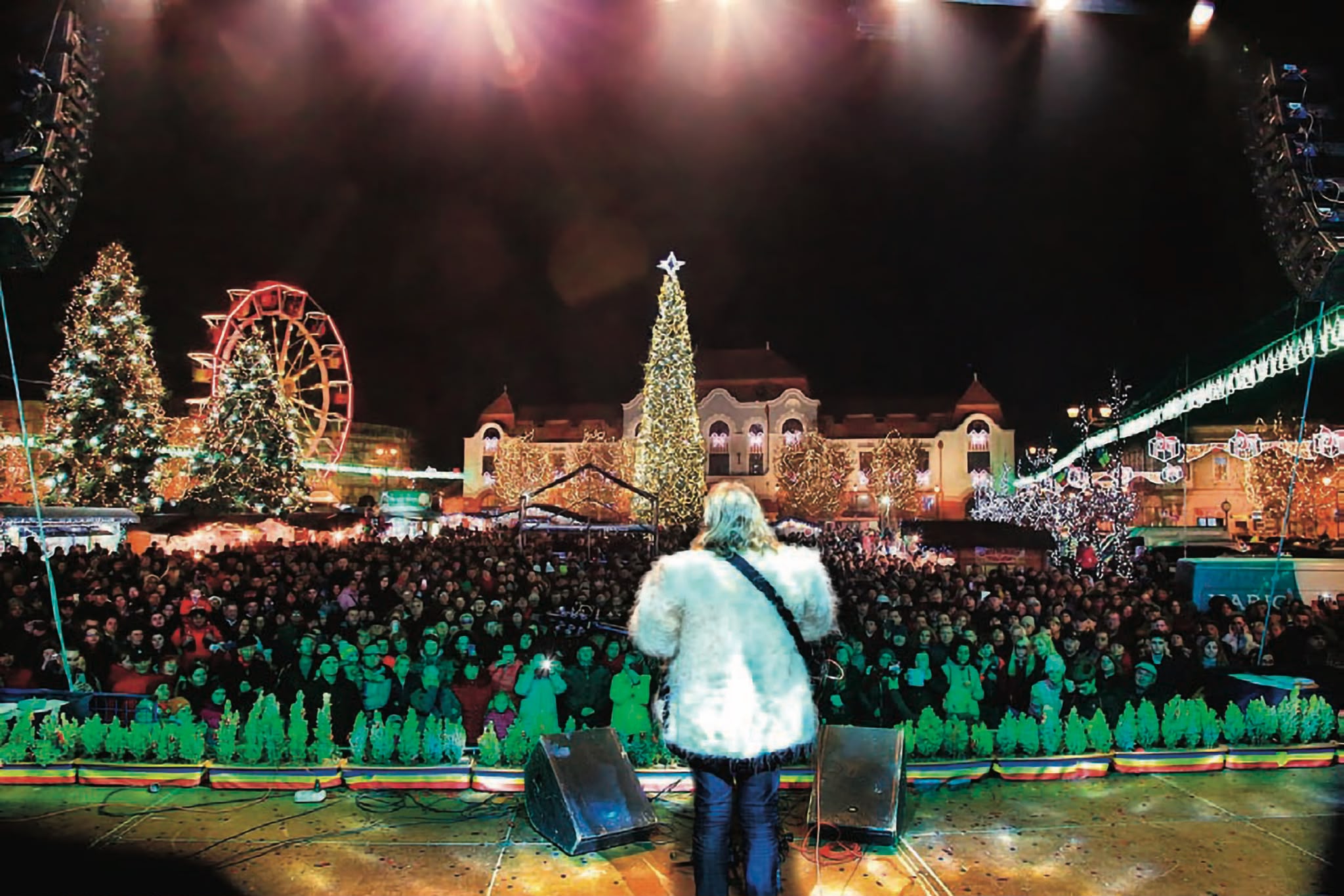
BAIA MARE, named European City of Christmas
Liberty Square, in the old town, will be the main gathering point for the festivities, according to the application, while Mara Park will host the traditional charity fair run by the Social Assistance Department. A decorated tourist train will link the two areas. The project also includes a collection of installations by local artists in Revolution Square and University Square, both renovated with European funding, and two mascots, a blue bear and a red bear in the city’s colours, who will guide children through the programme.
Romanians, Hungarians, Germans, Jews and Roma have lived side by side in Baia Mare for centuries, and over the past four years the city has also welcomed a Ukrainian community displaced by the war. The application sees that coexistence as the meaning of its Christmas, which, in the dossier’s words, aims to be «a work of the heart». Baia Mare has been a member of the Eurocities network since late 2025 and proposes, as a possible activity, a conference on European Christmas traditions at Pocol Castle, with guests from the network.
Omiš, European Village of Christmas
The application from the Croatian city of Omiš centres on the Nart Christmas village, a hamlet in the Dalmatian hinterland, in the Poljica region, with just eleven permanent residents. Without public funding, the Lučić family has built over more than thirteen years a two-kilometre illuminated trail with more than five million LED lights, which draws around 70,000 people during Advent. It is completed by klapa music, a living nativity scene, the cooking of some ten family farms and a sanctuary with more than 150 animals.
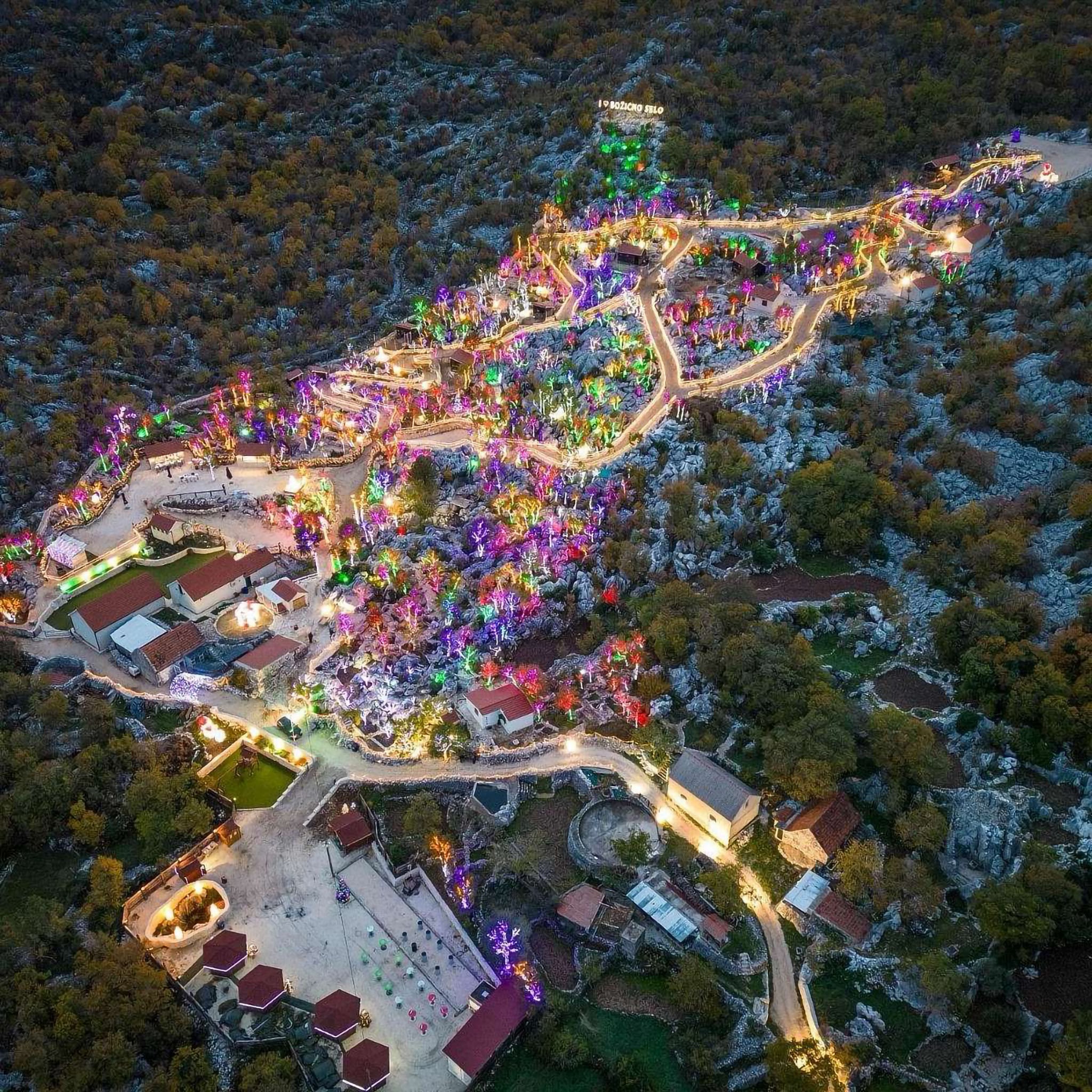
OMIS, named European Village of Christmas
The village covers almost 40,000 square metres and its trail of lights follows existing paths, native trees and dry-stone walls. Around fifty people, including klapa groups (Dalmatian polyphonic singers), folklore associations and theatre companies, take part in the programme. The Dalmatian dishes served during Advent are prepared by around ten local family farms. The project draws on the heritage of the historic Poljica Republic, regarded as one of Europe’s earliest forms of local self-government.
Visitors with disabilities enter free of charge, and there are twenty accessible parking spaces by the entrance. Most of the decorations are handmade from natural or recycled materials, and they are stored, repaired and rearranged every year. Outside the Christmas season, the sanctuary welcomes school groups and families with educational programmes.
Special mention for Fuentes de Oñoro
The jury chose to recognise the «Spanish-Portuguese Christmas» of Fuentes de Oñoro and Vilar Formoso, a cross-border celebration that the two towns have organised since 2023 together with the Municipality of Almeida. Its emblem is a pine tree about 15 metres tall planted right on the border line, which visitors can symbolically cross. The event includes a market on the avenue that joins the two towns and a Three Kings parade through the streets of both Spain and Portugal.
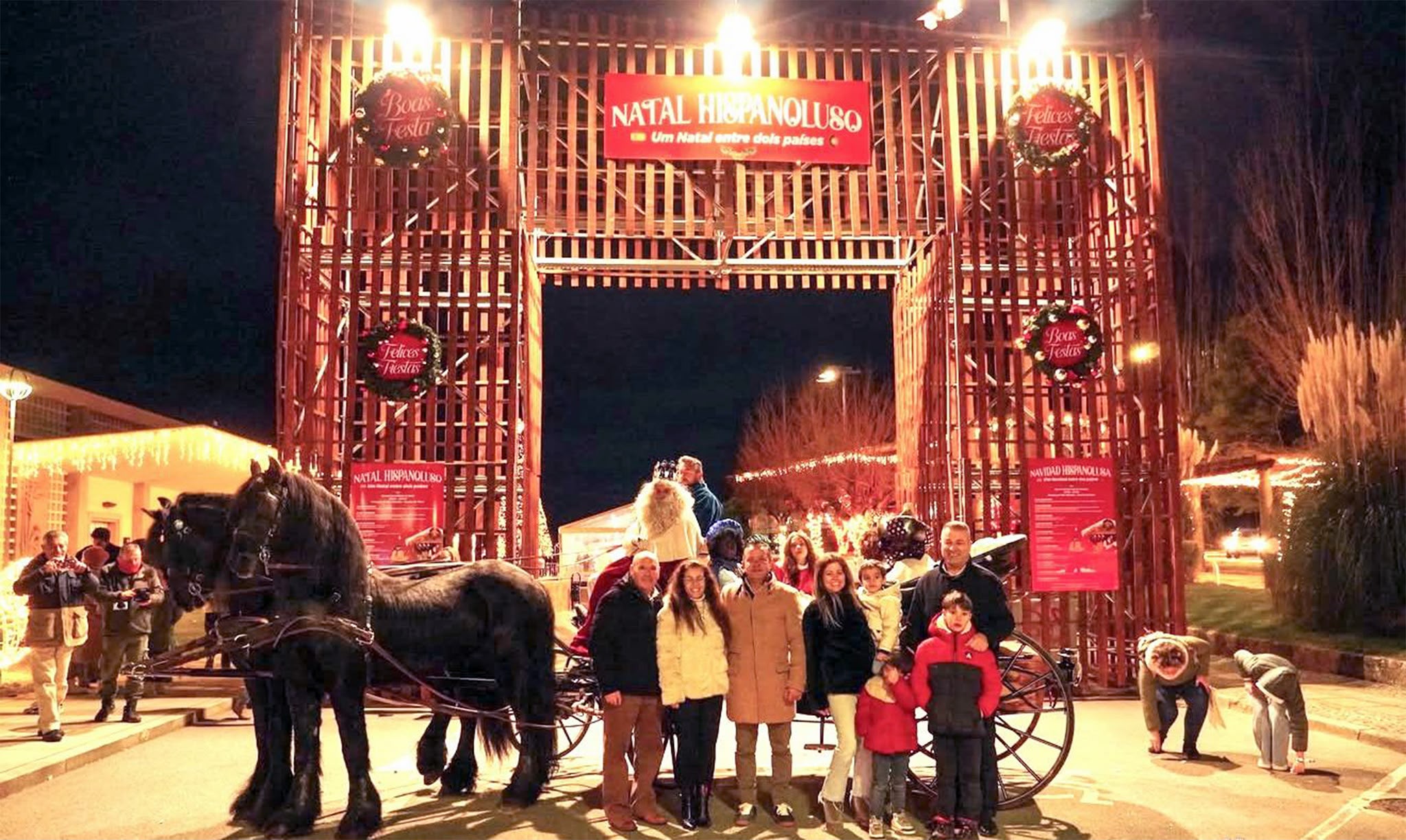
FUENTES DE OÑORO, Special Mention
The initiative began in 2023, with a first shared market and the installation of the tree, and was consolidated in 2024 with more events and lighting. In 2025 it reached its third edition, with a large marquee, sports, music and children’s activities and a joint Three Kings parade.
The dossier stresses the meaning of the parade: the tradition of the Three Wise Men is deeply rooted in Spain, while in Portugal Father Christmas plays a bigger role. The programme includes an opening ceremony with illuminated balloons, a route of lights with stops on both sides, bilingual children’s workshops, tastings with local producers, a charity day with a toy collection and a charity walk and race between the two countries. The application links it to the identity of La Raya, the border region, and to tourist itineraries joining Ciudad Rodrigo, Fuentes de Oñoro, Vilar Formoso and Almeida.